By J Brownlee, MavRadio.FM
On Oct. 30, 1938, the night before Halloween, Orson Welles and the Mercury Theatre on the Air told a story about Martians landing in New Jersey. The CBS broadcast turned H.G. Wells’ novel “The War of the Worlds” into a string of news bulletins and eyewitness accounts.
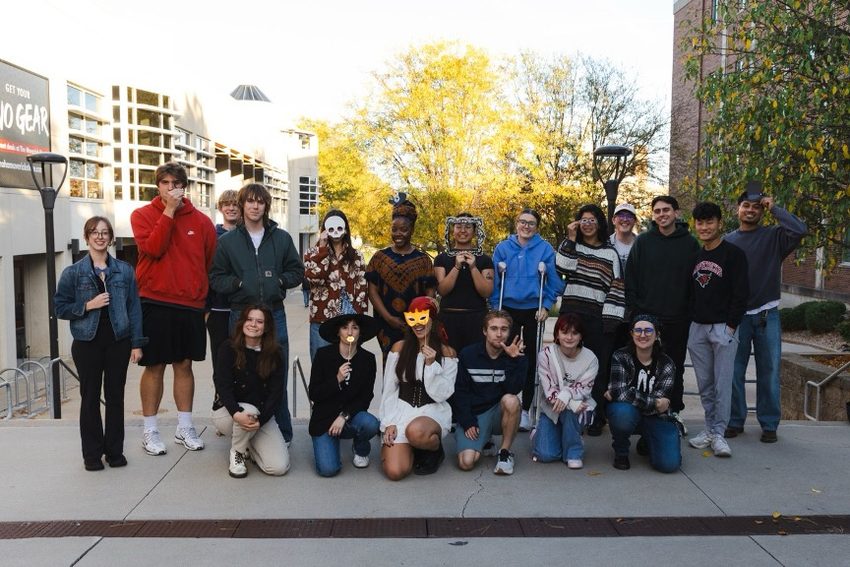
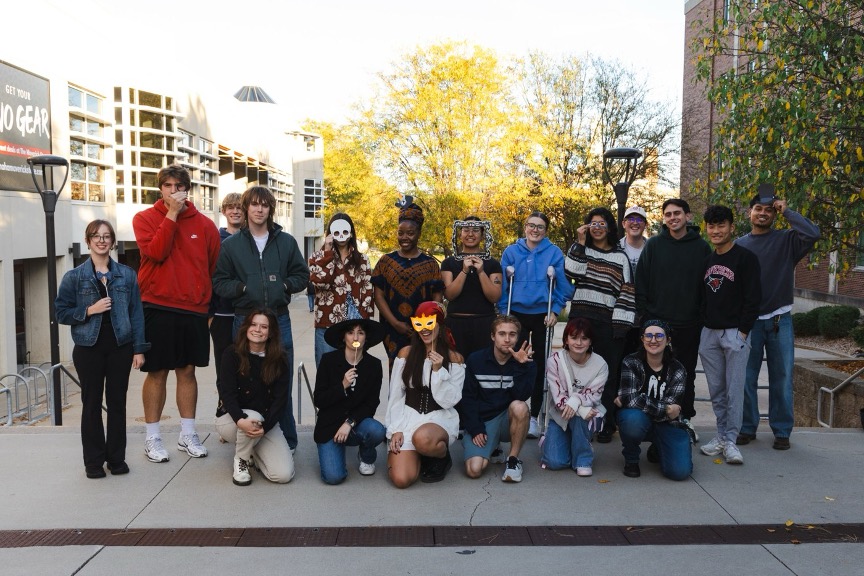
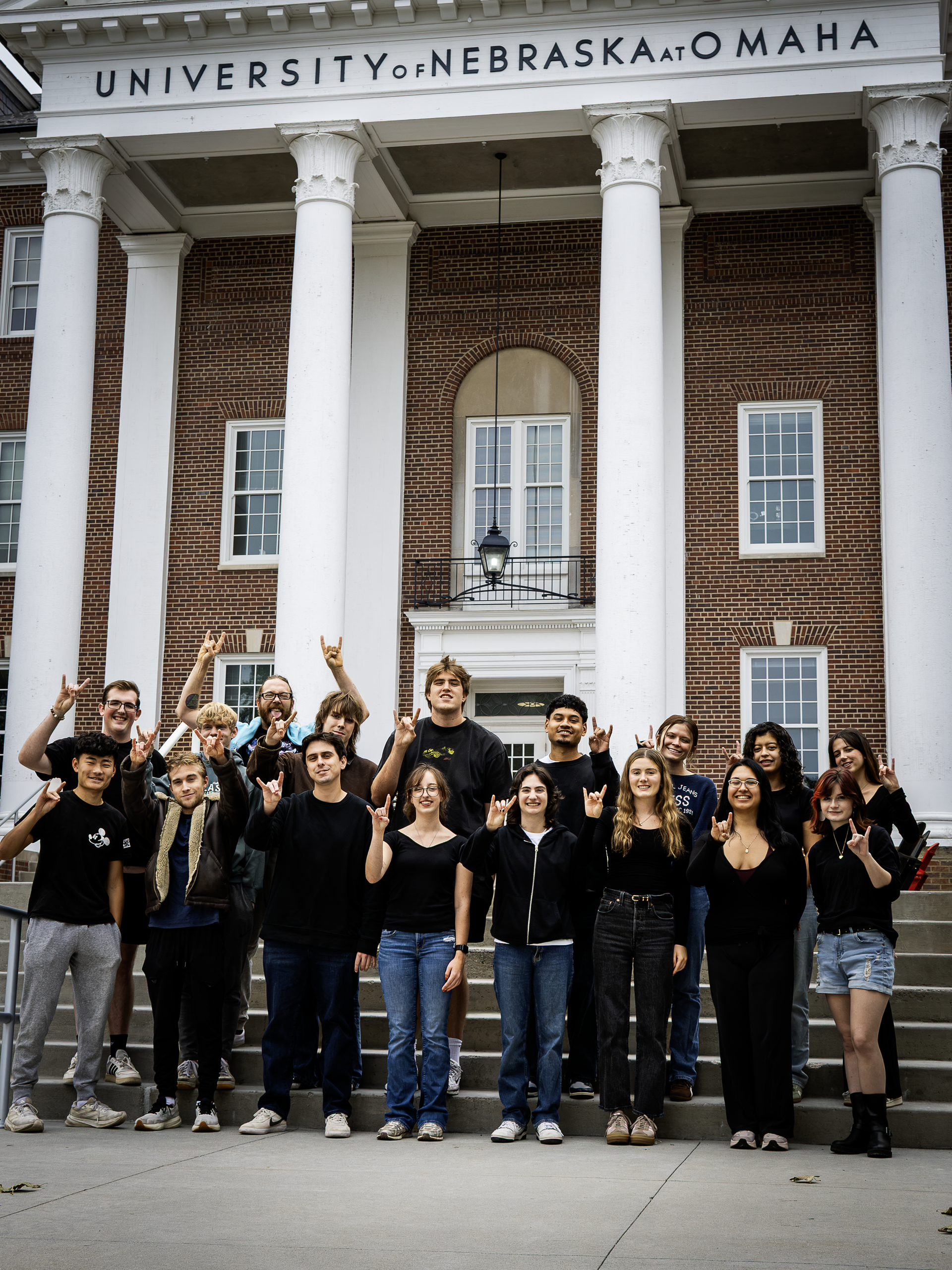
On Thursday, one night short of that broadcast’s 88th anniversary, 17 University of Nebraska at Omaha students went on the air with their own October stories.
Haunted Heartland, the live Halloween special produced by students in the UNO School of Communication, aired from 6 to 8 p.m. on MavRadio.FM, KVNO 90.7 HD-2. It was the show’s 15th year.
Welles would know the format. Hosts Juliette Eckler and Katie Klemmensen carried the night from the studio, and after each story aired, its reporter came on live from the scene. What changed is how people listen. The show streams live, comes back as a podcast and runs on social media while it airs.
A person, a place or an event
Students find their own stories, and nothing is off limits as long as they can verify it. Most started with a big topic and narrowed it to one person, one place or one event. Seven of the 17 stories were hauntings. The rest ranged from a cold case to a sandwich.
Sienna McEneaney chose a person. In the late 1920s, during a poker game at Omaha’s Blackstone Hotel, Bernard Schimmel made the players a sandwich of corned beef, sauerkraut, Swiss cheese and his own Thousand Island dressing on dark rye. They named it for one of the players, grocer Reuben Kulakofsky. McEneaney told the story through Schimmel’s three daughters.
“We so love our father,” Judy Weil said. “Keeping his legacy alive is just a great pleasure.”
Gizela Kwihangana chose a place. In July 1874, the Omaha Daily Bee reported a woman in white near Prospect Hill Cemetery who asked where her children were buried. Kwihangana checked the story. UNO biology professor James Wilson searched for the marble shop owner the article named.
“I got zero hits on Ancestry.com,” Wilson said. “Usually there’s hits of wrong people that come up. I got zero.”
North Omaha historian Adam Fletcher Sasse found the paper never mentioned her again. What Kwihangana could document was the cemetery itself, where it’s claimed some 15,000 people are buried, among them more than 800 Black Omahans and a Buffalo Soldier.
Jackson Diebold chose an event. In 1983, John Joubert killed two boys in Sarpy County. Diebold built his story on investigative reporter Mark Pettit, who interviewed Joubert seven times on death row. When Joubert’s attorney stood in the way of an interview, Pettit wrote Joubert a letter and sent a stamped envelope with it.
“He said, you were the first reporter smart enough to send me a stamp,” Pettit said. The story aired with a content warning.
A ghost story about a ghost story
Christopher Graf drove Seven Sisters Road in Otoe County after dark, where the story says a brother killed his seven sisters and hanged one on each hill. Nebraska City native Tammy Thomson Partsch had already gone looking for a paper trail.
“The thing is, it didn’t really happen, because there is no record of it at all,” she told him. “If your grandpa goes fishing and he catches a six-inch fish, the next time he tells a story, it’s an eight-inch fish.”
The same thing happened to Welles. The famous panic after “The War of the Worlds” mostly did not happen. The C.E. Hooper ratings service called 5,000 households that night, and 2% said they were listening. Newspapers losing advertisers to radio turned a few frightened listeners into a national story. The fish got bigger every time somebody told it.
Doing it
Every reporter did every job on their own story. They found at least two sources, recorded the interviews, recorded natural sound, wrote for the ear, voiced it and mixed it. The class played rough mixes out loud and pulled them apart together.
“I want people to know that these students put in so much work behind the scenes,” Eckler said.
Fifteen years
Haunted Heartland started in 2012 to give students experience broadcasting live and to put live radio back in front of the community. It has gone on live ghost hunts, brought mediums into the studio and stayed on the air through the 2020 pandemic. Its stories have won Eric Sevareid, Broadcast Education Association and Nebraska Pinnacle awards.
Ross Pizinger told that history as his story this year. A playback problem kept it off the air Thursday. It is in the podcast.
UNO folklore professor Todd Richardson explained why people keep telling these stories at all. “There are these big unexplainables,” he said. “Folklore comes in with an answer. It might not be a right answer, but it’s an answer.”
Haunted Heartland airs on the MavRadio.FM podcast. MavRadio is on Facebook and Instagram at UNOMavRadio.
The stories
- Vince Arculeo, Audrey Munson. The woman who modeled for the Black Angel.
- Cole Avey, The Black Angel. The statue children dare each other to touch.
- Oliver Begeman, The Thompson Scalp. William Thompson’s scalp and the library that kept it.
- Dylan Casart, The Omadome. Why people believe Omaha is protected from storms.
- Jackson Diebold, The Joubert Case. The John Joubert murders, with reporter Mark Pettit.
- Christopher Graf, Seven Sisters Road. A dirt road in Otoe County and a murder with no record.
- Sophia Gueret, Arts and Sciences Hall. The 1955 killing of Carolyn Nevins and the legend built on it.
- Gizela Kwihangana, Woman in White. Prospect Hill Cemetery and an 1874 newspaper account.
- Sienna McEneaney, The Reuben. The sandwich, the Blackstone and the Schimmel family.
- Juliet Mendoza, Dia de los Muertos. How the holiday is kept in Omaha.
- Gabe Miller, Clowns. A working clown on what Halloween did to the job.
- Malia Oltmer, Fremont Hauntings. A park that used to be a cemetery, and a rental house.
- Ross Pizinger, The Origin Story. Fifteen years of Haunted Heartland. In the podcast.
- Ivania Quijano, Brother Sebastian’s. The regular who never stopped coming in.
- Kevin Santos, Squirrel Cage History. The history of the rotary jail and what comes next for it.
- Chase Sherwood, Squirrel Cage Tour. The month the jail turns off the lights.
- Grace Walter, Pumpkin Spice. October, in a cup.
The crew
- Executive producer: Jodeane Brownlee
- Supervising producer: Cole Avey
- Producers: Samira Zarazua, Ivan Tovar
- Hosts: Juliette Eckler and Katie Klemmensen
- Digital media director: Bella McAtee
- Show open and close: Denise Valdez-Alvarez
- Production assistant: Jamie Bush